
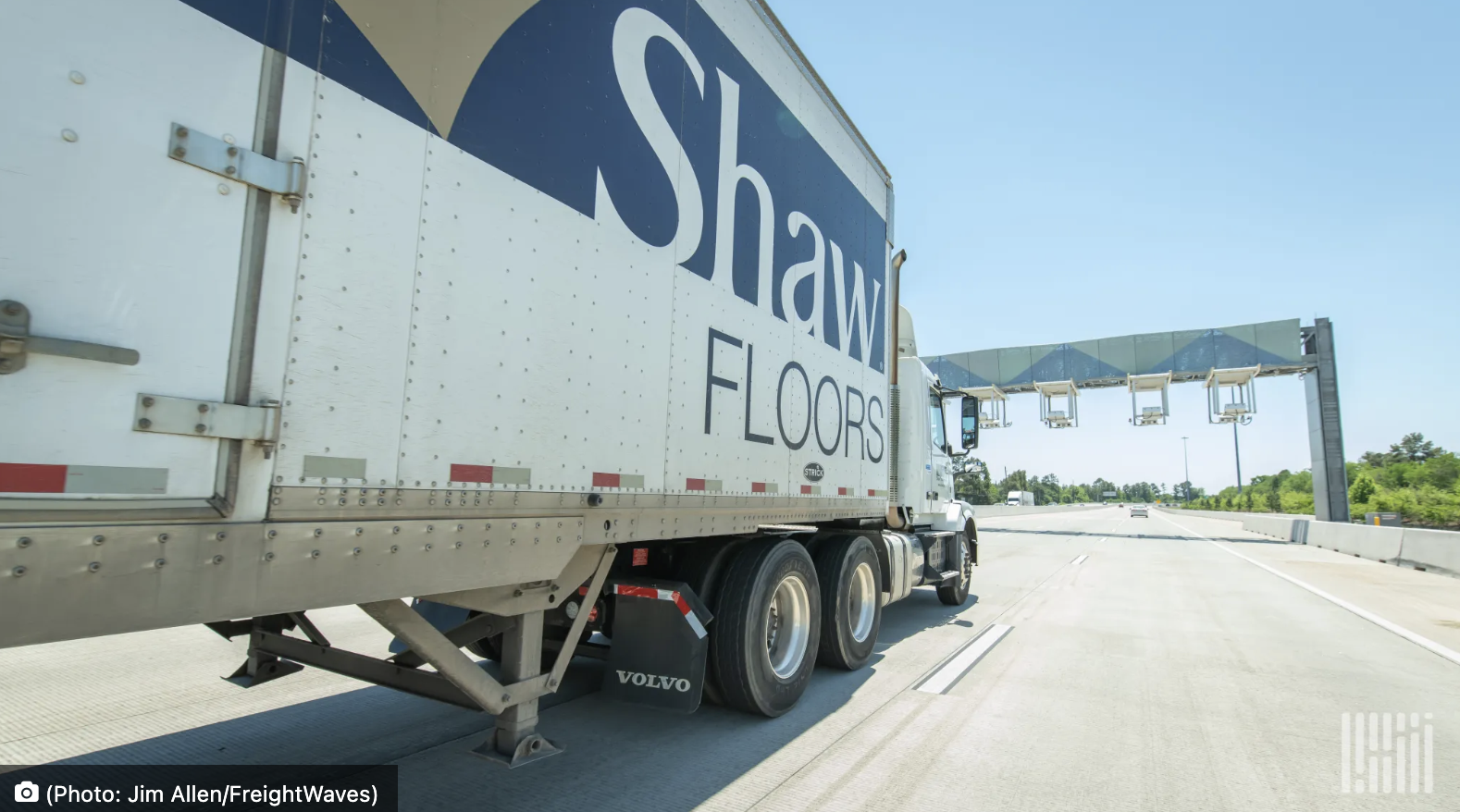
Getting that product back to the company so it can be recycled into new flooring is an exercise in sophisticated reverse logistics and effective use of freight. It comes off the floor seven to 10 years after delivery, often in small lots. By then the owner or tenant may have changed and not be aware that the flooring is recyclable or know who manufactured the product.
To combat this challenge, the Dalton, Ga., flooring maker has implemented a number of steps to make it easier for that product to be returned to Shaw rather than ending up in a landfill. For years, the company has printed a toll-free number and URL on the back of its EcoWorx carpet tile, which launched in 1999, so that demolition teams knows who to contact for product takeback.
“We also have tools within our own operations where we can identify places that we know we have had our products installed,” said Candi Hampton, vice president of global sustainability at Shaw, in an interview with FreightWaves. “That allows Shaw team members to contact them when they’re likely getting ready for renovation to ensure they are aware of our reclamation and recycling services, which are available at no cost to the customer.”
Shaw often needed a full truck or a substantial amount on a truck for it to be cost-effective to bring it back to the company.
Shaw’s answer, worked out in 2022 and 2023, was to run returns through the regional distribution centers that handle its outbound deliveries. Doing so allowed the company to collect smaller quantities from its customers and store it at the distribution center until enough material is collected to transport it to the company’s manufacturing and recycling facility in northwest Georgia.
Read more: FreightWaves
561-295-1777